
Reviewed · WALKING TOURS
St Andrews: 90-Minute Historical Walking Tour
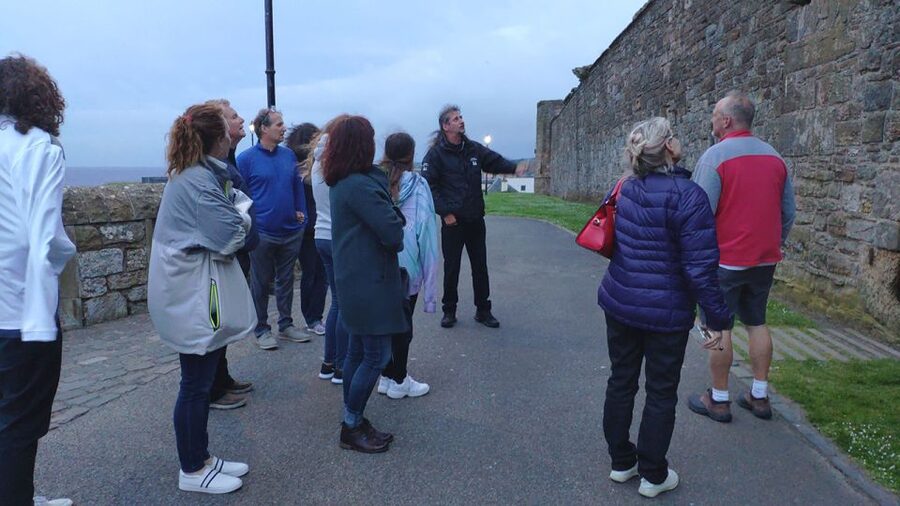
St Andrews’ past reaches far beyond its famous golf course. On this 90-minute walk, local historian Richard Falconer connects the university, cathedral and castle with stories of royal visitors, forgotten buildings and a spiritual centre said to date back to 500 BC.
I like two things in particular: the focus on lesser-known places, including the former Scottish seat of the Knights Templar, and the chance to hear about Falconer’s own long-running research. The route also gives you a useful introduction to the town’s central sights in a short visit.
One thing to weigh up: this is a walking tour for people who can keep a steady pace and follow spoken English. It does not cover golf, and the route is not suitable for people with mobility difficulties.
Key points to know before you go
- Local research is central: Richard Falconer has spent more than 40 years researching St Andrews and shares stories about its lost and forgotten past.
- The route links major sights: Expect university colleges, the cathedral, the castle area, the Pends and the harbour.
- Look beyond the familiar: The tour includes lesser-known subjects such as the St Andrews Meridian Line and a near-forgotten 16th-century university dwelling.
- It lasts 90 minutes: At $20 per person, it is a relatively short, focused way to get oriented in the historic centre.
- It is not a golf tour: For golf history, book one of the separate tours named by the operator.
- Walking and English matter: You need to walk at a steady pace and understand English well enough to follow the guide.
A short walk with a long historical reach
St Andrews is compact enough to explore on foot, but its familiar landmarks can leave you with an incomplete picture. The university, cathedral and castle are easy to recognize; understanding how the town’s religious, academic and royal stories connect takes more time. This walk aims to make those links in an hour and a half.
Falconer’s research provides the tour’s particular angle. The advertised subjects stretch across more than 2,000 years, from St Andrews as a spiritual centre from around 500 BC to its royal associations with Pictish kings, Robert the Bruce, Mary of Guise, James V, Mary Queen of Scots and Prince William. The value is not simply a parade of famous names. You get a guide’s account of how the town’s past reaches beyond its best-known medieval buildings.
The tone is intended to be historical rather than a collection of myths and legends. That distinction matters if you want context and evidence-led storytelling, rather than a tour built mainly around spooky tales or local folklore. Falconer’s research is also part of the subject: he shares developments from his work on St Andrews’ lost history, including the question of what happened to treasure associated with the cathedral.
More walking tours in St Andrews:
- St Andrews Must-Sees Daily Walking Tour (11am & 2pm)
★ 5.0 · 478 reviews - St Andrews: Top Sights Guided Walking Tour
★ 4.7 · 223 reviews - Private St. Andrews: Home of Golf Old Course Walking Tour
★ 5.0 · 69 reviews
Church Square, the starting point
The meeting place is outside The Bothy restaurant in Church Square, formerly the Dolls House Restaurant, behind Holy Trinity Church. Look for the local operator’s name board in front of the restaurant. The meeting point is specific, but the sign can be easy to miss, so arrive early enough to check the square rather than searching for it at the scheduled departure time.
Tours leave promptly. That is worth taking seriously: a compact route has little room for a late start, and the operator asks participants to be ready before the tour begins. The starting location also puts you in the centre of the town, so it is sensible to confirm directions and allow time to find the restaurant.
One detail needs checking: the activity information says the tour ends back at the meeting point, while the listed route names Central Bar as the finish. If you have a tight onward plan, ask the local operator where your particular tour will end.
Colleges and the university’s older story
The route includes St Mary’s College, a photo stop and sightseeing visit, followed by a photo stop at the School of History, identified with medieval history. St Leonards School is passed along the way. These stops introduce the university as more than a single landmark: its colleges and buildings are part of the town’s identity and its long academic past.
St Andrews University is described as the oldest in Scotland. Seeing college buildings in context helps you understand how the university sits within the historic centre rather than apart from it. The tour’s value here depends on the guide’s explanations. You are not promised an extended visit inside university buildings, so think of this as an outdoor introduction, with time to look and listen rather than a campus tour with interior access.
A near-forgotten 16th-century university dwelling is among the subjects Falconer discusses. That kind of detail suits the tour’s broader aim: to make you notice traces of the past that are easy to pass without knowing what they mean. The itinerary includes photo stops, but the main attraction is the story attached to each place.
The Pends, harbour and cathedral
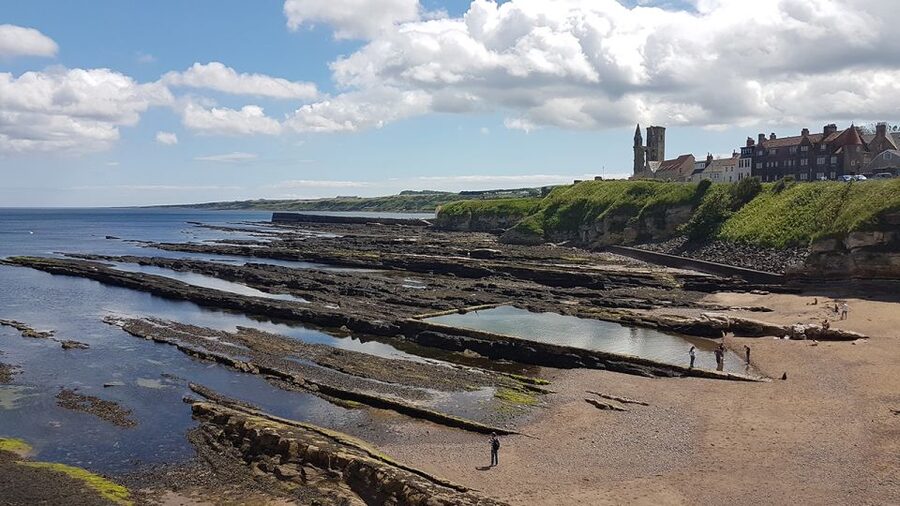
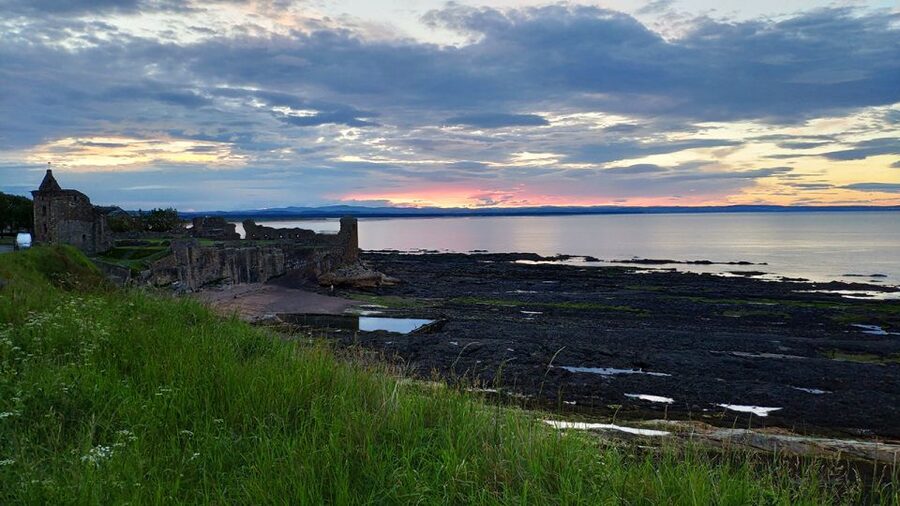
The Pends is listed as a stop for sightseeing, a visit and a walk. It gives the route a change of pace as you move between the university area and the waterfront side of town. The tour also points out the former Scottish seat of the Knights Templar, one of its more unusual subjects. The supplied details do not identify a specific building or promise an interior visit, so expect an explanation tied to the area rather than a formal site entry.
At St Andrews Harbour, the group pauses for sightseeing and photos. The harbour adds a different setting to a route otherwise focused on academic and ecclesiastical landmarks. It is a brief stop, not a separate harbour activity, but it helps give the walk a wider sense of the town.
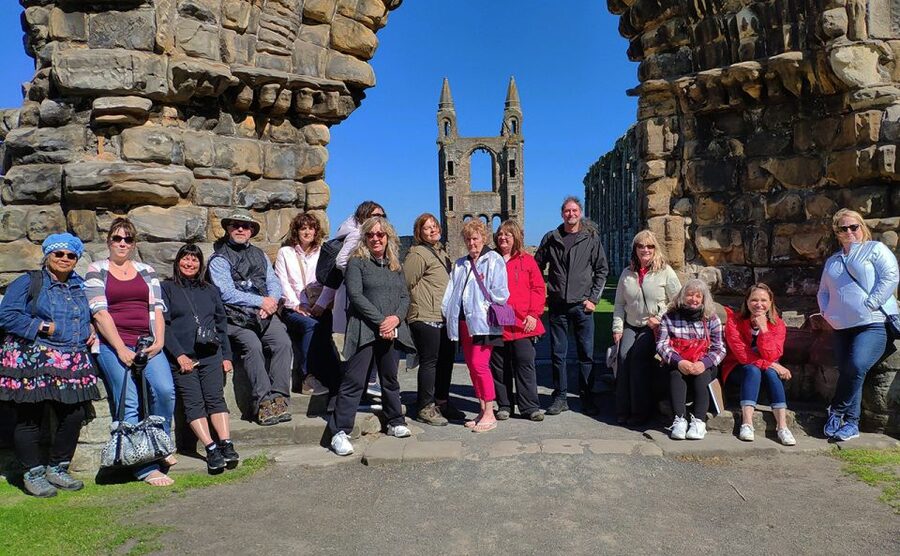
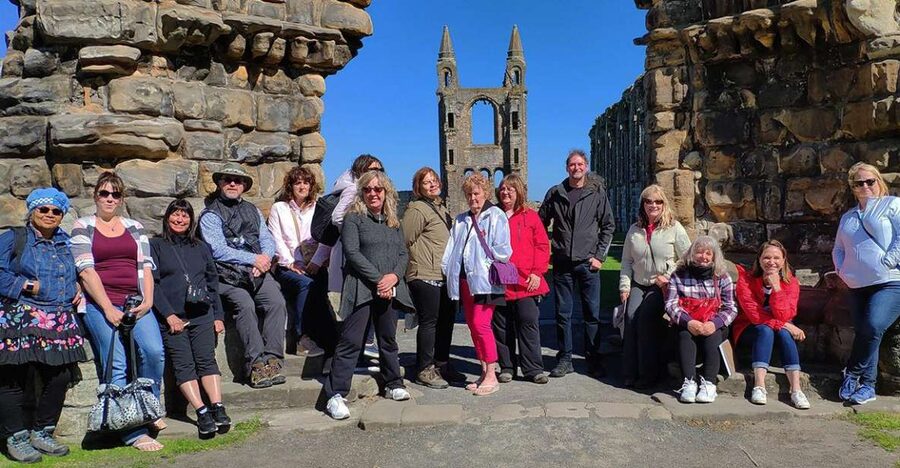
St Andrews Cathedral is the emotional and historical centrepiece. The itinerary allows a visit and photo stop, and the guide discusses the cathedral’s rise and fall, as well as its lost treasure. Falconer’s research includes the possibility that the treasure may still be here. Treat that as an open question within the tour’s historical discussion, not a promise of a treasure hunt or a chance to see an artefact.
The cathedral’s scale and story help explain why St Andrews held such spiritual importance. The tour’s account of the town’s religious past reaches back to 500 BC, while the cathedral itself represents a much later chapter. Connecting those time periods is more useful than simply taking a photograph and moving on.
More history tours in St Andrews:
- St Andrews: Golf Origins and Old Course History Tour
★ 4.7 · 322 reviews - St Andrews: Town, Golf, and Old Course History Tour
★ 4.7 · 162 reviews - St Andrews Old Course History Tour, for the Golfer
★ 4.5 · 150 reviews - St Andrews Tours: Town, Golf and Old Course History
★ 5.0 · 138 reviews
Castle views and St Salvator’s College
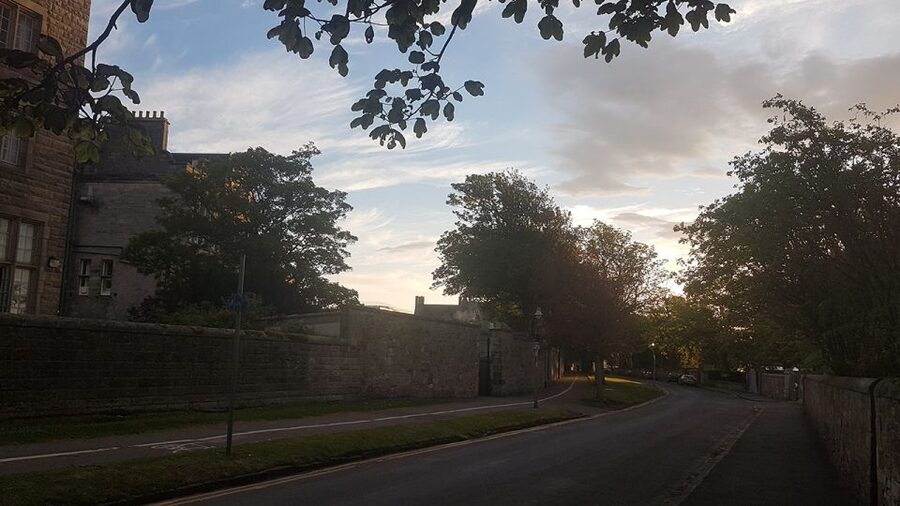
St Andrews Castle appears as a photo stop and pass-by, rather than a guaranteed visit inside. You can hear about the castle and its place in the town’s history while seeing it as part of the same historic setting as the cathedral. If interior access is important to you, do not assume it is included in this walking tour.
The route continues to St Salvator’s College, listed for a visit, sightseeing and photos. Together with St Mary’s College and the School of History, it rounds out the university side of the walk. These college stops make the route especially useful if you are new to St Andrews and want a clear first look at the institutions that shaped it.
A further topic is the St Andrews Meridian Line. The tour also covers why the town’s first observatory was demolished. These are precisely the sort of subjects that make a history walk worthwhile: not just the places every visitor can point to, but the local questions and lost structures that are easy to miss without a guide.
What the $20 price gets you
At $20 per person, this is a modest outlay for a guided introduction to several of St Andrews’ major historic areas. You are paying for a professional historian guide and the interpretation that connects the stops, not for admission to every attraction or a long, all-day excursion. The 90-minute format is a good fit if you have limited time or want an overview before exploring the town on your own.
A personal wireless receiver and whisper earphone are provided for larger groups. That can make it easier to hear the guide without everyone bunching close around him, though it is only specified for larger groups. The tour is in English, and the operator is clear that participants need to understand it well. Speaking slowly or translating during the walk is not considered a workable substitute.
The pace and length are also part of the value calculation. In a short time, you cover a good spread of subjects and locations, but you should not expect a leisurely stop at every landmark. The tour is designed to keep moving through the centre, so anyone who prefers a slower pace or frequent rests should choose another way to see the town.
What the tour does not cover
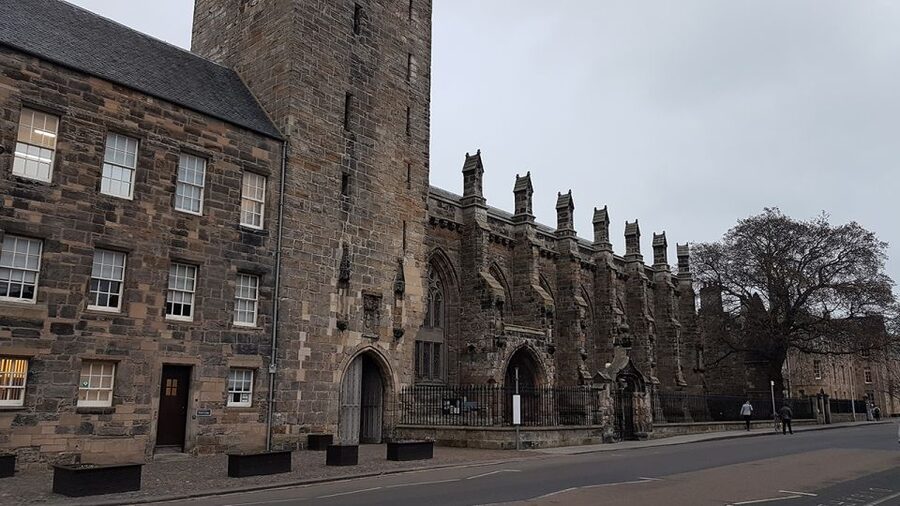
Golf is not part of this walk. That is worth spelling out because St Andrews is so closely associated with the sport that it is easy to assume a historical tour will include the Old Course. This one focuses on the town’s broader history, university, religious sites and lesser-known stories.
If golf is your priority, the operator names two alternatives: St Andrews: Old Course History Tour – 80s Pro Caddie Guide, and St Andrews: Town, Golf, and Old Course History Tour. Choose one of those instead if you want the game’s local story to be a main feature.
The tour is also not designed for slow walking. The operator specifically warns against booking if you have walking difficulties, including knee or hip problems, a sprained ankle, or a need to walk slowly. It is not suitable for wheelchair users or people with mobility impairments. Sturdy, comfortable shoes and clothing suited to the weather are sensible choices, since the walk goes ahead in rain unless conditions become too extreme.
Who will get the most from it
This walk suits you if you are curious about the layers behind St Andrews’ best-known sights and value a guide’s interpretation more than an unhurried visit inside each building. It is a particularly good fit for history-minded visitors, first-time visitors who want an orientation, and anyone interested in the university and the cathedral’s past.
It can also work well as a focused introduction before you spend more time exploring independently. After hearing about the colleges, the cathedral’s story and the town’s lesser-known sites, you will have more context for what you see later. The walk’s compact length makes it easier to fit into a day, though the schedule should not be mistaken for a full tour of every attraction.
Families should note the age rules: children under 16 must be accompanied by an adult, children under 5 can join free, and the tour is not suitable for children under 2. Pets are not allowed, except assistance dogs. Alcohol and drugs are prohibited, and disruptive behaviour is not accepted.
Should you book this St Andrews walk?
Book it if you want a brisk, guided account of St Andrews that goes beyond golf and the headline sights. Falconer’s long research into the town’s lost history, the royal connections and the overlooked subjects such as the Meridian Line give this tour a clear identity. At $20, it offers good value as a short historical introduction.
Skip it if you need a slow pace, want interior access to the castle or other sites, or expect golf to be part of the route. Before booking, be sure the English-language format and walking demands suit your group. If your schedule depends on the exact finish location, confirm it with the operator, since the meeting-point and Central Bar details differ.
FAQ
How long is the tour?
The walk lasts 90 minutes. Starting times depend on availability.
Where does the tour start?
Meet outside The Bothy restaurant in Church Square, St Andrews, KY16 9NN. It is behind Holy Trinity Church, and you should look for the operator’s name board.
Is golf included?
No. The tour does not cover golf. The operator offers separate tours focused on the Old Course and golf history.
Is the tour suitable for people with mobility difficulties?
No. It is not suitable for people with mobility impairments, wheelchair users, or people who need to walk slowly.
What language is the tour in?
The live guide speaks English. Participants need to understand English well, as speaking slowly or translating is not considered workable.
Can children join?
Children under 16 must be accompanied by an adult. Children under 5 can join free of charge, but the tour is not suitable for children under 2.
Newest tours in St Andrews
- The Original St Andrews Photo Shoot Tour★ 5.0 · 7 reviews
- St Andrews Walking Tours★ 5.0 · 8 reviews
- St. Andrews Scenic Stroll: A Private Walking Exploration★ 5.0 · 6 reviews
- A Wee Walk and a Cocktail in St. Andrews★ 4.0 · 7 reviews
- St Andrews History Tours★ 5.0 · 41 reviews
- Barrel-top whisky tasting in St Andrews★ 5.0 · 20 reviews
- Watch Building Experience – St Andrews★ 5.0 · 40 reviews
- Bespoke Private Tours of Scotland and the Borders★ 5.0 · 29 reviews
Walking Tours, compared.
Underground Vaults Walking Tour in Edinburgh Old Town
Read our review →
Edinburgh Castle: Guided Walking Tour with Entry Ticket
Read our review →
Edinburgh Castle Guided Walking Tour in English
Read our review →
Edinburgh Darkside Walking Tour: Mysteries, Murder and Legends
Read our review →
Old Town Walking Tour History and Tales in Edinburgh
Read our review →

Browse the lists this tour appears in